Health doesn't need extra time.It needs better defaults inside the day you already have.

Hlty Beings works alongside everyday family life — mornings, meals, play, and wind-down.
Not with rules to follow, but with systems that make healthier choices easier to return to.
Health lives in small,
repeatable moments.
Most habits aren't built during "health time."
They form in between everything else:
- before the school rush
- at the table
- during play
- at bedtime
These moments are easy to miss and easy to overthink. We design for them instead.

Hlty Beings fits into your routines thatyou already follow.
Children already sit with worksheets, activities, and play. The question is what that time quietly teaches them while it passes.
Our activity sheets replace neutral content with health-themed content. They learn fruit names, sleep vocabulary, body awareness.
Not because they were taught. Because they were surrounded by it.
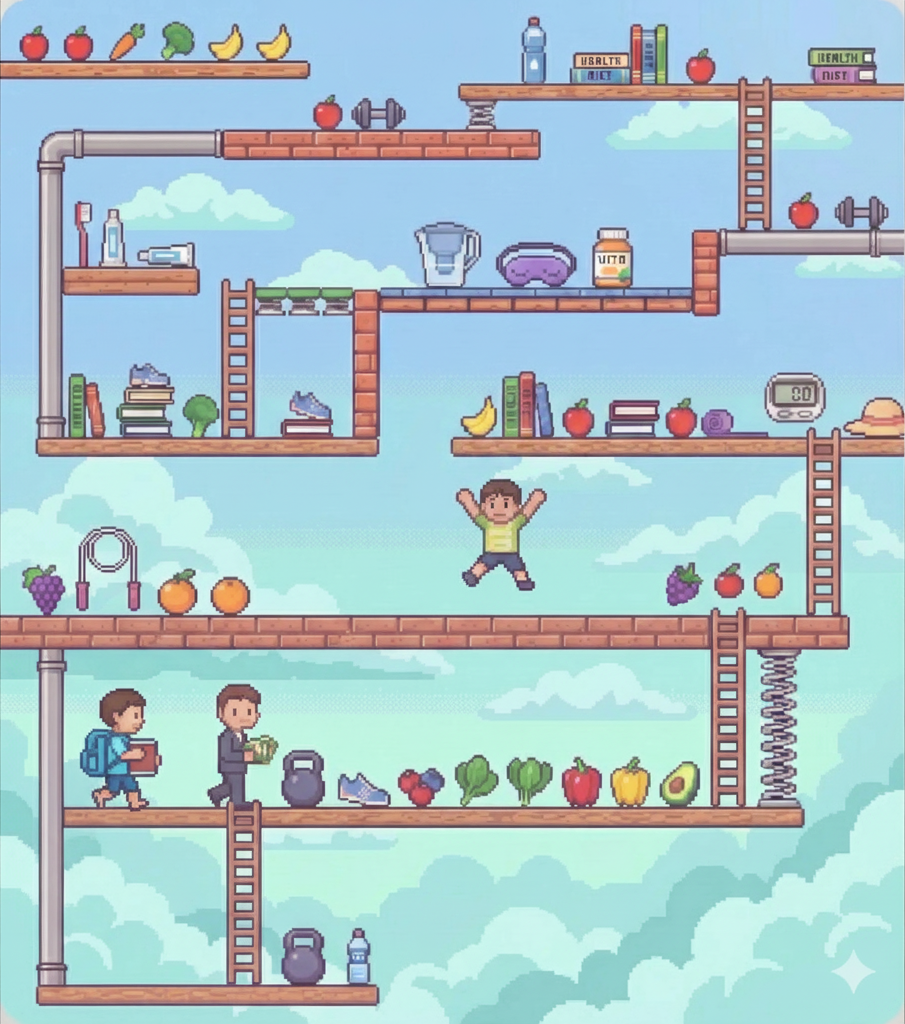
THEY LEARN IT WITHOUT KNOWING IT
A word search about sleep teaches sleep vocabulary. A puzzle about fruits builds fruit recognition. Not a lesson. Just content that does its work while they are busy playing.
EXPLORE THE SLEEP PACKSAME ACTIVITY, A DIFFERENT WAY
They were already going to do an activity. Make it a health-themed one. Same ten minutes, same pencil and paper. Different content going in.
EXPLORE THE KITCHEN PACK20 THEMES. ALL FREE
Fruits, vegetables, sleep, feelings, hygiene, the ocean, wild animals and more. Five printable activity sheets per theme, ready for home or classroom. Pick what fits the week.
BROWSE ALL FREE PACKS
Parent stories
AROUND SLEEP
"Bedtime wasn't the problem, stimulation was."
We used to think our kids just “weren’t sleepy.” Nights felt like a battle of reminders, delays, and sudden bursts of energy right when lights were supposed to go off. What changed wasn’t the bedtime, it was the environment before it.
We started dimming the lights across the house, lowering the volume of music and TV, and slowing everything down about an hour before sleep. Fewer bright lights, fewer loud sounds, fewer exciting activities. The whole home shifted into a quieter rhythm.
Nothing dramatic, just softer light, softer voices, calmer energy. The kids began falling asleep faster. Even the adults felt sleepier sooner. Bedtime stopped feeling forced and started feeling natural. Turns out, sleep wasn’t something to “make happen.” It arrived on its own once the stimulation faded.

AROUND JUNK FOOD
"Cravings weren't the problem, availability was."
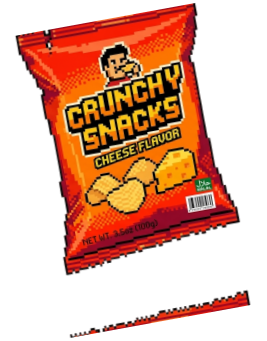
We used to worry constantly about how much junk food the kids were eating. Whenever they were hungry, chips, sweets, or packaged snacks were the first things they asked for even when homemade food was right there.
What we realized was simple but uncomfortable: the kids weren’t the problem. The pantry was. Junk food is engineered to taste great, fill you up fast, and make you want more. As long as it was within reach, it always won the negotiation.
So we stopped bringing it home. No dramatic speeches, no strict policing just a quiet change in what was available. Instead, we kept fruits, nuts, and homemade snacks ready and visible.
At first, there was resistance. Then hunger did what hunger does. With no junk to fall back on, they started eating what was there. Over time, those foods stopped feeling like “second choice” and became normal.

AROUND SPORTS
"Participation wasn't the problem enjoyment was."
We worried that the kids were becoming inactive, full of energy, yet reluctant to play or stick with sports. So we did what most parents do: researched the "best" options and enrolled them in classes we believed would be good for them. But attendance was irregular, enthusiasm was low, and it often felt like we were pushing more than they were choosing.
What changed wasn't the sport, it was the sense of fun and ownership. When we finally asked them what they wanted, the answer was simple: they wanted to play where their friends were. Familiar faces, shared laughter, and a sense of belonging mattered more than the type of sport itself.
We switched to classes their friends attended. Suddenly, reminders weren't needed. They showed up willingly, stayed engaged, and looked forward to going. The same kids, the same energy just a different context.
It turned out they didn't need better coaching or stricter discipline. They needed fun, friendship, and a choice in the decision. Once those were in place, participation took care of itself.